
Loading...


When it comes to European residency programs, few are as attractive and accessible as the Greece Golden Visa. Since its launch in 2013, this program has quickly become one of the most sought-after residence-by-investment routes in Europe. Designed for international investors, it not only provides a gateway to Greece but also offers visa-free access across the entire Schengen Area. For families, entrepreneurs, and frequent travelers, the Greece Golden Visa represents an affordable and flexible pathway to long-term security in Europe. In this article, we’ll explore why the Greece Golden Visa stands out among other European residency schemes, its benefits, investment options, and what makes it one of the most popular choices for global investors.


What is the Greece Golden Visa Program?


Investors who make eligible investments in Greece are granted the privilege to remain there for an extended period of time under the Greece Golden Visa program. Unlike traditional visas, it does not impose a requirement to physically live in Greece. Instead, maintaining the investment is the only condition for renewal every five years.


Applicants may also be able to seek for Greek citizenship, which would grant them full EU rights, once they had been residents for seven years.


Family inclusion is one of the program's main benefits. The main applicant can extend residency benefits to their spouse, children under the age of 21, and even dependent parents from both sides of the family. This makes it particularly attractive for families looking for a secure base in Europe.


Investment Routes for the Greece Golden Visa


There are numerous eligible investment alternatives under the flexible Greece Golden Visa scheme. It is among the most reasonably priced residency-by-investment programs in the EU, with a minimum investment criterion of €250,000. The primary routes are as follows:


1. Real Estate Investments


• €250,000: Specialty real estate, such restoring historic structures or turning business spaces into residential ones.


• €400,000: Buying a single, at least 120-square-meter house.


• €800,000: Real estate in well-known locations including Athens, Thessaloniki, and important islands.


2. Tourism and Leasing Agreements


  • Investors may enter into 10-year lease agreements for hotels or tourist residences.


Depending on the area, the necessary expenditure can range from €400,000 to €800,000.


3. Financial Investments


  • €500,000 – Deposits with Greek banks, capital contributions to Greek firms, or investments in real estate companies.


  •  Greek government bonds worth €500,000 thathavea three-year minimum maturity.


  • €350,000 to €800,000 – Investments in listed shares, corporate bonds, or mutual funds focused on Greece.


This flexibility allows investors to tailor their entry into the program based on financial preferences and long-term goals.


Benefits of the Greece Golden Visa for Investors


The Greece Golden Visa is a mobility and lifestyle option in addition to a residency program.


Here are some of the top benefits:


  1. Visa-Free Travel Across the Schengen Zone
    Residency holders can travel freely within 27 European countries without additional visas.


  2. No Mandatory Stay Requirement
    Greece does not need candidates to remain in the nation in order to maintain their residency, in contrast to several other EU resident programs.


  3. Long-Term Security
    As long as the investment is kept, the residence visa can be renewed every five years without a cap.
    Dependents, including parents, are covered under one application.


  4. Financial Opportunities
    Investors may rent out their properties, own company shares, and enjoy dividend income.


  5. Pathway to Citizenship
    Applicants can apply for Greek citizenship, which grants full EU rights, after seven years of continuous stay.


  6. Access to Education and Healthcare
    Greece offers a robust healthcare system and quality education, making it attractive for families relocating or planning for the future.


Application Process for the Greece Golden Visa


The process to obtain a Greece Golden Visa is straightforward but requires careful planning and documentation. Here’s a step-by-step overview:


  1. Identify Investment Opportunity
    Visit Greece to explore and finalize the preferred investment, whether in real estate, tourism, or financial assets.


  2. Complete Transaction
    Make the qualifying purchase or transfer of funds.


  3. Submit Application
    Provide essential documents such as a valid passport, proof of investment, health insurance, and a clean criminal record.


  4. Verification & Approval
    Authorities review and approve the application, after which the residence permit is issued.


Processing timelines can vary, but with proper legal assistance, most applications are completed within a few months.


The Reasons the Greece Golden Visa Is the Best Option for Schengen Entry


The Greece Golden Visa stands out among Europe’s residency programs for several reasons. First, it is one of the most cost-effective options, with investment thresholds starting at just €250,000. Second, the program offers tremendous flexibility, both in investment routes and residency obligations.


The Schengen access is crucial for international investors who want mobility. For families, the inclusion of dependents ensures long-term stability and security. And for entrepreneurs, Greece’s strategic location at the crossroads of Europe, Asia, and Africa offers excellent business opportunities.


Compared to similar programs in Portugal or Spain, the Greece Golden Visa is not only more affordable but also easier to maintain, as it doesn’t require extended stays in the country.


Greece: A Gateway to Europe


Beyond the visa itself, Greece is an appealing destination for many investors. Its Mediterranean lifestyle, rich cultural heritage, and strategic location make it a perfect base for international families and businesses. Residents benefit from:


  • A stable legal and economic framework.


  • High-quality healthcare services.


  • Access to both public and private education systems.


  • Easy connectivity to major European, Asian, and African cities.


Greece meets all of your needs, whether you're searching for a place to vacation, a place to call home, or a place to make strategic investments


Final Thoughts


The Greece Golden Visa continues to be one of the leading residency-by-investment programs in Europe. With its affordability, flexible investment options, and broad family benefits, it remains a top choice for investors seeking mobility and security in the Schengen Area.


For those who want the freedom to travel, the opportunity to live in one of Europe’s most beautiful countries, and the option to eventually apply for citizenship, the Greece Golden Visa is a pathway worth considering.


By combining lifestyle, financial security, and global mobility, this program has firmly established itself as a premier residency solution for investors worldwide.


Need more information on visas, immigration, and tourism ? Click here.


In recent years, skilled professionals returning to Kerala has become one of the most significant migration trends in . Reversing the long-standing trend of outward migration, thousands of professionals are opting to return home, according to a new LinkedIn Talent Insights report that was presented at the Kerala Development and Innovation Strategic Council's (K-DISC) Skill Kerala Global Summit.


This phenomenon is not just a statistical shift—it reflects deeper socio-economic changes in Kerala, as well as broader opportunities for the state’s economy and workforce. From IT and healthcare to tourism, education, and entrepreneurship, Kerala is emerging as a preferred destination for professionals who once sought careers in Gulf countries and Indian metros.


The Return Migration Wave: Why Skilled Professionals are Coming Back


The LinkedIn report reveals that more than 9,800 skilled professionals returned to Kerala from the UAE over the last five years. The UAE accounts for more than half of the total inflow, followed by Saudi Arabia, the United Kingdom, Qatar, and the United States. The numbers show that Kerala is not only welcoming talent from the Gulf region but also from Western economies where Keralites have long held high-skill positions.


At the domestic level, a sizable number of professionals are also moving back to Kerala from Indian states such as Karnataka, Tamil Nadu, Maharashtra, Telangana, and Haryana. In fact, Karnataka alone saw around 7,700 professionals migrating back to Kerala, with technology and innovation leading the way.


This dual migration—global returnees and domestic returnees—shows that skilled professionals returning to Kerala is no longer a niche trend but a mainstream reality.


What’s Driving Skilled Professionals Back to Kerala?


Several key factors are influencing this reverse migration:


  1. Better Work-Life Balance
    Many Keralites who worked abroad or in India’s busy metros realized that high-paying jobs often came at the cost of long hours, stress, and little personal time. Kerala provides a better pace of living, a more balanced lifestyle, and closeness to family.


  2. Opportunities in IT, Healthcare, and Education
    According to LinkedIn’s data, returning professionals are finding new opportunities in Kerala’s IT parks, hospitals, universities, and even in the booming tourism sector. The ecosystem is evolving fast, and skilled professionals returning to Kerala see long-term growth potential here.


  3. Entrepreneurial Growth
    A significant share of returnees are choosing to start their own businesses, leveraging their global exposure in finance, operations, and management. Kerala’s startup ecosystem, supported by government policies and incubators, is becoming an attractive choice for these professionals.


  4. State Initiatives
    Through platforms like K-DISC and various skill development programs, Kerala has invested in upgrading its workforce and making the state an innovation hub. This institutional support further attracts skilled professionals returning to Kerala who want stability and opportunities to grow.


Global Migration vs Domestic Migration


The LinkedIn report makes an interesting distinction between global and regional migration inflows.


  • Global Returnees: Predominantly from the UAE, Saudi Arabia, and Western countries, these professionals bring expertise in civil engineering, mechanical industries, finance, and entrepreneurship. This contributes to strengthening Kerala’s traditional and emerging industries.


  • Domestic Returnees: Largely from Karnataka and Tamil Nadu, they add to Kerala’s IT, product management, and research talent pool. This complements the state’s push toward digital innovation and technology.


Together, these trends mean that skilled professionals returning to Kerala are not only strengthening the economy but also diversifying it across multiple industries.


The Economic Impact of Skilled Professionals Returning to Kerala


The numbers speak volumes. Kerala now ranks tenth among Indian states, with a staggering 172 percent increase in the pool of professional talent in just five years. Cities like Kochi, Thiruvananthapuram, Thrissur, and Kozhikode are home to over 40% of this workforce.


The inflow of skilled professionals returning to Kerala is expected to have ripple effects on:


  • Business Growth: As more entrepreneurs return, Kerala can expect an increase in small and medium enterprises (SMEs) and startups.


  • Foreign Investment: With globally experienced professionals settling back, Kerala becomes an attractive investment destination for multinational companies.


  • Skill Transfer: Returnees bring global best practices, advanced knowledge, and innovative approaches that elevate local industries.


  • Employment Opportunities: The creation of new businesses and expansion of industries provide job opportunities for local youth.


Sectors Benefiting Most from the Return Migration


. Information Technology (IT)


Kerala’s IT hubs, such as Technopark in Thiruvananthapuram and Infopark in Kochi, are drawing professionals from Bengaluru and abroad. With remote work opportunities also on the rise, skilled professionals returning to Kerala can continue working with global firms while enjoying life in their home state.


2. Healthcare


Doctors, nurses, and medical specialists who built careers in the Gulf or Europe are now moving back, adding immense value to Kerala’s healthcare system. Their expertise is boosting medical tourism as well.


3. Education and Research


Returnees are taking up teaching, research, and administrative roles in Kerala’s universities, colleges, and private institutions. This not only raises academic standards but also makes Kerala a hub for international education collaborations.


4. Tourism and Hospitality


Kerala’s globally recognized tourism sector benefits from professionals with international hospitality experience, helping the state market itself better and improve service standards.


Challenges Ahead for Kerala


While the influx of skilled professionals returning to Kerala brings many opportunities, it also presents challenges that the state must address:


  • Infrastructure Readiness: Kerala must ensure its urban centers can handle the growing demand for housing, transport, and digital infrastructure.


  • Policy Support: The government needs to continuously upgrade policies to support entrepreneurship and innovation.


Industry Diversification: Over-reliance on IT or healthcare could be risky. It is essential to support the expansion of new sectors like biotechnology, logistics, and renewable energy.


By addressing these challenges, Kerala can maximize the benefits of this return migration wave.


The Road Ahead: A Talent Hub in the Making


Kerala has always been known for exporting talent to the world. But now, the state is turning into a destination for returnees. The findings of the LinkedIn report will likely guide Kerala’s future policies in global collaboration, investment, and talent development.


As more skilled professionals return to Kerala, the state’s economy is poised to shift gears. With expertise flowing in from across the globe, Kerala could very well position itself as a talent hub not only for India but for South Asia.


Conclusion


The surge of skilled professionals returning to Kerala marks a turning point in the state’s migration story. Once known for brain drain, Kerala is now witnessing brain gain. Professionals who once left for the Gulf or Indian metros are now investing their skills, knowledge, and experience back home.


With supportive government policies, a growing startup ecosystem, and thriving industries, Kerala has a unique opportunity to leverage this return migration for long-term growth. The journey ahead may pose challenges, but the potential for innovation, economic progress, and social development is greater than ever.


In the coming years, as more professionals make the decision to return, Kerala’s economy and society will be enriched in ways that could set an example for other Indian states. The wave of skilled professionals returning to Kerala is not just a temporary trend—it’s a transformation that could define the state’s future.


Need more information on visas, immigration, and tourism ? Click here.


Trump's Travel Ban


The recent revival of Trump's travel ban has sparked global debate, once again highlighting the former president's hardline immigration stance. Under the new proclamation, Trump's travel ban affects 19 countries with full or partial restrictions. This updated policy, reminiscent of the controversial 2017 "Muslim Ban," impacts thousands of immigrants, international students, workers, and travelers.


This article provides an in-depth analysis of Trump's travel ban, listing the affected countries, outlining who is most impacted, and explaining the broader consequences for global mobility and diplomacy.


Trump's Travel Ban


Full Ban Under Trump's Travel Ban: 12 Countries


Twelve nations are under a full travel ban, which suspends both immigrant and non-immigrant visas. Citizens from these countries are barred from entering the United States for purposes including work, tourism, education, or family reunification.


Countries under the full ban include:


  • Afghanistan


  • Myanmar


  • Chad


  • Republic of the Congo


  • Equatorial Guinea


  • Eritrea


  • Haiti


  • Iran


  • Libya


  • Somalia


  • Sudan


  • Yemen


In 2023, over 112,000 individuals from these countries received U.S. visas. With the travel ban enforced, many will now face automatic rejections, significantly affecting families and communities.


Countries Facing Partial Restrictions


The Trump travel ban partial restrictions affect seven more countries. These limitations target specific visa types like student visas (F, J, M), tourist visas (B1/B2), and immigrant visas.


Seven countries facing partial restrictions include:


  • Burundi


  • Cuba


  • Laos


  • Sierra Leone


  • Togo


  • Turkmenistan


  • Venezuela


These restrictions are disruptive, especially for students and workers. Approximately 115,000 individuals from these nations received U.S. visas in 2023 alone.


Families and Immigrants Severely Affected


One of the most devastating outcomes of Trump's travel ban is family separation. U.S. citizens with relatives in banned countries face challenges in uniting with loved ones during weddings, funerals, or emergencies. Pending visa applications are stalled or canceled, leaving families in limbo.


An estimated 226,500 people from the 19 countries will face visa denial, delay, or re-application. Even green card holders and visa-holders living in the U.S. might avoid international travel, fearing denial of re-entry.


Though some exemptions exist for diplomats, athletes, and immediate relatives, the Trump travel ban has already created an atmosphere of uncertainty for immigrants.


Why Did Trump Enforce the Travel Ban Again?


According to the former president, the ban is a security measure. Trump cited a visa overstay case in Boulder, Colorado, to push for stronger immigration enforcement. The administration emphasized that nations on the list had poor cooperation with the U.S., weak vetting systems, and political instability.


Examples cited include:


  • Chad: 49.5% visa overstay rate (2022)


  • Yemen: 19.8% overstay rate amid conflict


  • Eritrea and Equatorial Guinea: High non-compliance rates


The travel ban is framed as temporary and subject to change, depending on each country’s cooperation level.


Global Backlash and Diplomatic Tensions


The international response to Trump's travel ban has been swift. The African Union condemned the move, calling it discriminatory. Chad, in retaliation, suspended visas for U.S. citizens. Somalia and Sierra Leone expressed willingness to negotiate with the U.S. to lift the restrictions.


Venezuela outright denounced the policy and warned its citizens of heightened risks when traveling to America.


Experts believe this policy could sour diplomatic relations, limit international collaboration, and hurt America’s global reputation.


Legal Perspective: Is the Ban Constitutional?


The ban is issued via a presidential proclamation, not a congressional act. This raises legal questions. Critics compare it to the 2017 Muslim Ban, which the Supreme Court eventually upheld after several court challenges. President Biden reversed it in 2021, calling it discriminatory.


Legal scholars predict renewed court battles if this latest version causes mass visa denials or violates due process rights. Advocacy groups are preparing legal challenges, especially if humanitarian cases are affected.


Who Will Feel the Greatest Impact?


The Trump travel ban targets many categories of people:


  • Short-term travelers: Including tourists, students, and conference attendees


  • Immigrants: Seeking family-based or work-based permanent residency


  • Refugees and asylum seekers: From conflict zones


  • Existing visa holders abroad: Risk being barred from re-entering


Those currently in the U.S. with valid visas remain unaffected—unless they leave and attempt to re-enter.


Implementation Date and Future Expansion


The travel ban takes effect on June 9 at 12:01 a.m. EDT. Only those applying from abroad without a valid visa will be affected. Individuals already in the U.S. or holding current visas can stay.


However, Trump hinted at expanding the list. Additional countries could face bans if deemed security threats or non-compliant with U.S. immigration checks.


Broader Consequences for Global Mobility


Beyond immigration, Trump's travel ban affects:


  • Universities: Facing declining foreign student admissions


  • Businesses: Losing global talent from restricted countries


  • Healthcare: Hospitals that rely on immigrant medical professionals


  • Tourism: Drop in visits from affected countries


Institutions that rely on international talent may need to reconsider recruitment strategies and risk management policies.


Final Thoughts on Trump's Travel Ban and What Lies Ahead


Whether viewed as a safeguard or a discriminatory policy, Trump's travel ban has serious implications. The ban signals a firm return to restrictive immigration policies and reflects a security-first approach to international engagement.


For individuals and families caught in the crossfire, it introduces more uncertainty, delays, and distress. Advocacy groups, legal teams, and international organizations will likely challenge this measure as it unfolds.


Whether the proclamation remains in force or is rescinded through legal or political channels remains to be seen. In the meantime, staying informed, proactive, and connected with immigration resources is essential.


Traveling to the U.S.? Everything about U.S. immigration — click here.


ETIAS Fee Hike


The upcoming Europe ETIAS fee hike will significantly increase costs for travellers under visa‑exempt regimes. This change affects millions of visitors from countries such as the US, UK, Canada, and certain Indian citizens with resident visas. Beginning in late 2026, the current €7 charge will rise to €20—a nearly threefold increase that redefines the cost of travel across the Schengen Zone.


ETIAS Fee Hike


What Is ETIAS and Why the Fee Is Increasing


The ETIAS fee hike refers to the increase in cost associated with the European Travel Information and Authorization System (ETIAS). ETIAS is an electronic travel authorization system designed for short‑term stays in Schengen countries by visa‑exempt travellers. The goal behind the ETIAS fee hike includes aligning fees with global counterparts such as U.S. ESTA and U.K. ETA, funding maintenance and security infrastructure, and enhancing database connectivity with agencies like Europol and Interpol. This long‑anticipated fee rise is part of a broader digital transformation.


Fee Hike Timeline and Who Is Affected


Starting late 2026, the ETIAS application fee increases from €7 to €20 per person.


Tourism‑exempt travellers, including citizens of the U.S., UK, Canada, Japan, and Indian nationals who live abroad on long‑term visas, will be required to pay.


Children under 18, adults over 70, and eligible family members of EU citizens are exempt from the fee.


ETIAS Application Process for Travel Visa-Exempt Tourists


This ETIAS application process remains streamlined: fill out an online form, pay the fee, and receive authorization—often within minutes. If flagged for additional screening, approval may take up to 30 days. Once granted, ETIAS remains valid for three years or until passport expiry, and allows multiple stays of up to 90 days within any rolling 180‑day period.


Travel Costs to Europe Will Rise


With the ETIAS fee rise, the cost of travel to Europe is increasing across multiple dimensions:


  • A family of four will now pay €80 instead of €28—almost tripling eligibility costs.


  • Indian nationals holding long‑term residency in visa‑exempt countries previously benefited from minimal authorization costs. With this fee rise, each journey now carries an added expense.


  • Frequent travellers and businesses travelling repeatedly will feel the cumulative impact of the higher ETIAS fee.


Why the ETIAS Fee Is Justified (Security and Global Standards)


EU officials emphasize the fee change is not arbitrary—it supports digital border transformation, ensures better security coordination, and brings ETIAS in line with global norms. The ETIAS fee hike funds technology updates, interface improvements with law enforcement databases, and ensures more thorough pre‑travel vetting of applicants.


Budgeting Tips for ETIAS Travel in 2026+


Here are effective ways to manage your travel budget amid the ETIAS fee hike:


  • Apply early—avoid last-minute surcharges or rush charges.


  • Group travelers together—family members or work groups apply simultaneously for consistency.


  • Ensure passport validity—ETIAS remains valid for three years, so having a long passport expiry maximizes value.


  • Plan multi-leg itineraries—traveling across multiple Schengen countries spreads out the authorization cost across experiences.


  • Monitor local exchange rates, especially for travelers budgeting in currencies like INR, GBP or CAD.


Who Is Exempt from the ETIAS Charge?


Children under 18 and adults aged 70 or older


Family members of EU citizens (under certain conditions)


Non-EU nationals with legal freedom of movement under EU treaties
If you fall in any exemption category, you won’t need to pay the ETIAS fee—even after the fee rise.


Why Indian Citizens Should Prepare for Increased ETIAS Fees


Indian passport holders residing abroad—such as in the U.S., UK, or Canada—have traditionally benefited from minimal entry costs using long‑term resident visas. The ETIAS fee hike means all eligible travellers must now pay the full fee, which is a major shift.


Extended Impact on Indian Travelers and EU Trip Planning


This change especially affects Indian professionals on long‑term visas, students abroad, and families traveling together. Even those with remote working arrangements or frequent EU business trips will need to include €20 per person in their travel budget starting in 2026.


When the Fee Will Come Into Effect


The European Commission’s proposal is expected to be finalized by late 2026. Once adopted, there is a two‑month review window by the European Parliament and Council. Unless objected to, the new fee becomes binding.


Summary and Key Takeaway


The ETIAS fee hike increases authorization costs from €7 to €20 per traveler.


Millions of visa‑exempt travelers, including Indian citizens living abroad, will now incur higher pre‑travel fees.


Despite this, the application process remains largely unchanged and remains quick and digital.


Budgeting ahead and applying strategically can help minimize the impact.


Final Thoughts


While the upcoming ETIAS fee hike may raise the upfront cost of travel to Europe, it brings stronger digital infrastructure, improved border security, and compliance with global travel standards. As long as travelers plan ahead, budget carefully, and remain informed, European trips will still remain both accessible and fulfilling—even with slightly higher costs.


Need info on European immigration and visas? Click here.


Bahrain Golden Residency


As Gulf countries ramp up efforts to attract global talent and investors, the Bahrain Golden Residency is emerging as a strategic and flexible visa program. Known for its simplicity, affordability, and minimal residency requirements, this long-term residency initiative is increasingly favored by expatriates—especially Indian nationals—looking for a stable and accessible base in the Middle East.


Launched under Bahrain’s Vision 2030 initiative, the Golden Residency program grants a renewable 10-year visa with significant perks. Designed to encourage economic diversification and attract foreign investment, the residency opens doors to professionals, retirees, business owners, and skilled individuals across the globe.


What is Bahrain’s Golden Residency?


The Bahrain Golden Residency is a long-term visa designed to attract qualified talent and investments. It provides eligible individuals the right to live, work, operate a business, and sponsor family members—free from the constraints of traditional Gulf residency schemes. With its 10-year renewable duration, it offers unmatched flexibility and long-term security.


Unlike many Gulf visas that bind holders to specific employers or full-time presence, Bahrain’s model allows residents to maintain their visa status with just one visit every 90 days. Visa holders can also switch employers or establish a business without burdensome approval processes.


Who is Eligible for Bahrain Golden Residency?


The program’s inclusivity is one of its most attractive features. It supports four main applicant categories:


  1. Professionals: Foreign nationals who have lived and worked in Bahrain for five years and earn a monthly salary of BHD 2,000 (approx. ₹4.4 lakh or USD 5,300) are eligible. This route is ideal for Indian professionals in healthcare, IT, education, and finance sectors.


  2. Retirees: Applicants receiving a pension of BHD 2,000 per month may qualify. Those applying from abroad must show a pension of BHD 4,000. It offers a peaceful, low-cost alternative for retirees.


  3. Property Owners: Individuals owning property in Bahrain worth at least BHD 200,000 (approx. ₹4.4 crore or USD 530,000) can apply. There are no hidden charges or extended holding conditions, unlike some other Gulf countries.


  4. Talented Individuals: This category is for those with notable accomplishments in areas such as science, sports, entrepreneurship, and the arts. Documentation like awards or official recognition may be required.


Bahrain Golden Residency vs. UAE Golden Visa


The Bahrain Golden Residency is becoming a preferred alternative to the UAE Golden Visa for multiple reasons:


  • Application Fees: BHD 5 (₹1,100 / USD 13) initially, and BHD 300 (₹66,000 / USD 795) upon approval.


  • Residency Requirement: Unlike the UAE, continuous presence in Bahrain is not needed—one visit every 90 days is sufficient.


  • Employment Flexibility: No need to stick with a single employer; self-employment is allowed.


For Indian expatriates, mid-level investors, and digital nomads, this program offers a more accessible and less bureaucratic solution for Gulf residency.


Key Benefits of Bahrain Golden Residency


The program offers several compelling advantages:


  1. Professional & Business Freedom Switch jobs or start a business without employer sponsorship.


  2. Family Inclusion Sponsor your spouse, children, and even parents under one visa.


  3. Zero Personal Income Tax Residents enjoy full earnings without tax deductions.


  4. Minimal Residency Requirement Stay valid by visiting Bahrain once every 90 days.


  5. Fast & Transparent Processing Applications are digital, with visa issuance typically within 10 working days via Bahrain’s Labour Market Regulatory Authority (LMRA).


  6. Access to Public Services Golden Residency holders gain access to essential services such as healthcare, education, and real estate ownership.


Required Documents for Bahrain Golden Residency


The application process is streamlined and clear. Here's what you need:


  • A valid passport (minimum six-month validity)


  • Proof of residency in Bahrain (for current residents)


  • Six months of bank statements


  • Valid health insurance applicable in Bahrain


  • Supporting documents like awards or certifications (for talent-based applicants)


Why Indian Nationals Are Choosing Bahrain Golden Residency


India has strong diplomatic and economic ties with Bahrain. With one of the largest Indian expatriate communities in the Gulf, the country is already a familiar and welcoming destination.


The Bahrain Golden Residency offers Indian nationals a cost-effective alternative to the UAE, especially for those in mid-level professional roles. From freelancers and digital nomads to retirees, the lower financial threshold and greater flexibility make this program increasingly attractive.


Indian professionals in sectors such as finance, tech, and healthcare are especially well-suited for the program, given the salary criteria. Retirees benefit from a warm climate, affordable lifestyle, and proximity to India.


Bahrain Golden Residency and Vision 2030


Bahrain's residency program supports the country’s long-term goal to diversify away from oil dependency. Vision 2030 aims to build a knowledge-based, innovative economy powered by international talent and investment.


By reducing red tape and encouraging global participation, Bahrain is positioning itself as a leader in the Gulf’s evolving immigration and economic development strategies.


Final Thoughts: Is the Bahrain Golden Residency Right for You?


If you’re considering a move to the Gulf—whether for career advancement, retirement, or business—the Bahrain Golden Residency is worth exploring.


With its low entry cost, minimal bureaucracy, and long-term security, the program is one of the most approachable and beneficial residency options in the region. For skilled professionals, business owners, retirees, and creatives, Bahrain presents not just a residency, but an opportunity for meaningful growth and lifestyle improvement.


For updates on visa applications and immigration changes, click here.


Portugal Golden Visa


As the world's economic, lifestyle, and migration options continue to change, Portugal's Golden Visa has become one of the most popular residence programs. As it continues into 2025, this program continues to be a popular option for investors globally, particularly Indian nationals wishing to investigate chances in Europe. For individuals seeking the freedom and benefits of European residency, the Portugal Golden Visa has proven to be a great choice, whether for business, school, or a more secure future.


Portugal Golden Visa 2025: A Revolution for International Investors


The Portugal Golden Visa has attracted over 12,000 investors globally since its 2012 inception, contributing significantly to the nation’s economy. With an injection of over €800 million into Portugal's economy in 2023 alone, this program stands as a key driver of growth. Its extension through 2025 demonstrates its ongoing relevance and popularity.


Portugal remains among the most appealing destinations in Europe due to its high quality of life, excellent healthcare and education, and easy travel access across the continent.


A residency-by-investment initiative, the Portugal Golden Visa allows foreign nationals to gain Portuguese residency via various qualifying investments. Notably, after five years—and if all conditions are met—investors can apply for EU citizenship.


Investment Options under the Portugal Golden Visa


One of the most compelling aspects of the Portugal Golden Visa program is the range of investment routes available, giving applicants the flexibility to choose based on their financial goals. Key pathways include:


  1. Real Estate Investment: This is the most popular option. Investors can buy property in Portugal for personal or investment purposes. The minimum qualifying amount starts at €280,000, depending on location and property type. This option benefits from Portugal's growing real estate sector.


  2. Business Investments: This route involves investing in a Portuguese startup, SME, or established business. It generally requires a higher capital outlay but can offer higher returns and contribute to local economic growth.


  3. Cultural and Heritage Projects: With a minimum investment of €250,000, this option allows investors to support arts, science, or heritage initiatives. It's one of the most affordable routes to EU residency and supports Portugal’s rich cultural identity.


Top Benefits of the Portugal Golden Visa for Indian Investors


Indian investors find the Portugal Golden Visa especially attractive. Here are its primary advantages:


  1. Affordable Investment Thresholds: Starting at €250,000, the program is significantly more accessible than other European residency schemes. Real estate starts from €280,000, offering Indian investors a cost-effective entry into Europe.


  2. Visa-Free Schengen Travel: Golden Visa holders enjoy visa-free access to all 27 countries in the Schengen Area, enabling seamless travel for work or leisure across Europe.


  3. Pathway to Citizenship: After five years, investors and their families can apply for permanent residency or Portuguese citizenship, allowing unrestricted living and working rights throughout the EU.


  4. High Standard of Living: Portugal is known for its scenic beauty, low crime rate, and excellent healthcare and education systems. It offers an ideal environment for families looking to relocate.


  5. Surging Interest from Indian Nationals: Indian applicants made up nearly 25% of all Golden Visa submissions in 2023. Entrepreneurs, professionals, and families from India are increasingly viewing Portugal as a prime relocation and investment destination.


Why Indian Investors Should Consider the Portugal Golden Visa


The program serves as a gateway for Indian nationals to tap into Europe’s educational, business, and cultural benefits. Portugal’s residency status opens up vast opportunities with long-term returns and accessible investment levels.


Portugal Golden Visa: Strong Bilateral and Economic Ties


Portugal and India share deep-rooted economic and cultural relations. Key sectors such as tourism, technology, and manufacturing have seen bilateral growth. Indian investors can leverage these relationships for business expansion within the EU market.


Soaring Demand for European Residency


As more Indian citizens seek overseas residency and global mobility, the demand for the Portugal Golden Visa is expected to rise. For those pursuing lifestyle upgrades, tax efficiency, or cross-border business ventures, Portugal offers a streamlined, reliable route to European residency.


Conclusion: Portugal Golden Visa Offers Strategic European Access


With its extension into 2025, the Portugal Golden Visa remains one of the best options for securing residency in Europe. It offers investors flexible entry options, visa-free travel in the Schengen Zone, and the chance to gain EU citizenship.


For Indian investors in particular, the program unlocks a high standard of living, secure future, and global mobility.


Whether you're a business owner, skilled professional, or family person seeking European stability and growth potential, the Portugal Golden Visa offers a clear, affordable, and long-term solution.


Explore more about visa options and immigration pathways – click now.


Permanent Residence


Canada is one of the most popular places for international students to study, with over 800,000 students living there. The nation offers overseas graduates clear avenues to move from student status to permanent residency (PR), in addition to high-quality education. Due to Canada's on going need for qualified workers, many foreign graduates are increasingly looking at ways to obtain permanent residency through a variety of immigration schemes, such as the Provincial Nominee schemes (PNPs), the Post-Graduation Work Permit Program (PGWP), and the Express Entry system. We'll walk you through the process of an international student transitioning from study permits to permanent residency in Canada in this blog article.


Step 1: Get a Post-Graduation Work Permit (PGWP) by applying.


It usually starts with the Post-Graduation Work Permit (PGWP), which is the first step towards becoming a permanent resident of Canada. Applying for this work permit permits graduates of qualified Canadian Designated Learning Institutions (DLIs) to remain and work in Canada for a maximum of three years, contingent on the duration of their academic program.


The reason the PGWP is a necessary step is


It offers experience working in Canada: Getting Canadian work experience is essential when applying for permanent residence, particularly through programs like the Express Entry program's Canadian Experience Class (CEC).CEC, or the Canadian Experience Class, is a component of the Express Entry system.


No limitations on employers: In order to obtain the required work experience and improve their eligibility for permanent residence, the PGWP permits graduates to work for any Canadian firm.


Alternative immigration programs: The PGWP work experience can be used to apply for other PR programs or Provincial Nominee Programs (PNPs).


It is imperative that you apply for a PGWP as soon as possible after graduating. In order to be eligible, students must apply during the 180 days after getting their final transcripts.


STEP 2: Getting into the Express Entry Pool


The next stage is to apply for Express Entry after accumulating sufficient job experience in Canada. The federal immigration selection process, known as Express Entry, handles petitions for permanent residence in three primary categories:


FSW or the Federal Skilled Worker Program


FST or the Federal Skilled Trades Program


Experience Class in Canada (CEC)


International graduates can construct an Express Entry profile through their IRCC protected account if they have completed Canadian work experience and meet the requirements of these programs. Candidates are placed in the pool according to the Comprehensive Ranking System (CRS), which assigns points. Education is one of the many elements that the Comprehensive Ranking System (CRS) considers when assigning points.


Language ability (French or English)


Age and Canadian work experience


Additional elements, such as a legitimate employment offer or provincial nominations.


But merely setting up a profile does not ensure that you will receive an Invitation to Apply (ITA).a Request for Applications (ITA). a Request for Applications (ITA). At regular drawings, ITAs are given to the top-ranked applicants in the Express Entry pool. Strategies to raise your CRS score should be your main emphasis because these draws might be competitive, particularly for candidates with lower CRS scores.


Ways to Raise Your CRS Score


Candidates frequently ask how they may raise their CRS score to maximize their chances of getting an ITA once they are in the Express Entry pool. Your score can be raised in a number of ways, including:


Obtain more proficient work experience in Canada: Your CRS score will increase as you gain more job experience in Canada. Strive for employment experience that aligns with the Express Entry skilled worker programs' qualifications.


Retake the language exam: The ability to communicate in either French or English is a key component of the CRS score. Think about retaking your language exam to improve your score and earn more points. You have a better chance of becoming an ITA if you score higher.


Full-time university education: Gaining more education, like a master's degree or diploma, might improve your profile in the Express Entry pool and raise your CRS score.


Get an offer of employment that is legitimate. The following can be included to a legitimate employment offer from a Canadian employer: A legitimate offer of employment from a Canadian company can raise your CRS score and increase your pooling ability.


Obtain a Provincial Nominee Program (PNP) application: To address local labor market need, PNPs in numerous Canadian provinces recruit applicants from the Express Entry pool. A provincial nomination practically ensures an ITA by adding 600 points to your CRS score.


Evidence of Funds and Profile Modifications


Candidates must prove they have enough money to sustain themselves and their dependents in Canada when submitting an Express Entry application for permanent status. The size of the applicant's family affects the particular requirements for proof of funds specified by the IRCC. These monies ought to be easily accessible and free of restrictions.


The settlement fund criteria will be updated by the IRCC to reflect 50% of the low-income cut-off (LICO) as of July 28, 2025. Candidates who wish to continue being eligible for Express Entry must make sure they fulfil these new standards.


Keeping your Express Entry profile updated with any changes to your marital status, employment position, or educational background is also very important. A five-year suspension from reapplying could occur from giving incorrect information, and failing to update your profile could result in disqualification or inadmissibility.


How Will Your Work Permit Change?


The expiration of a Post-Graduation Work Permit (PGWP) is a problem for international graduates. To regain your status, you must take legal action if your PGWP expires before you receive an ITA or your application for permanent residency is approved. People with expired PGWPs are advised by the IRCC to refrain from working without permission since this may compromise their eligibility for permanent residence.


You might have to leave Canada if your work permit status is not restored. You may still be eligible for foreign permanent residence, nevertheless, if you fulfil the requirements.


PNPs or Provincial Nominee Programs to Support Permanent Residence


Through their respective Provincial Nominee Programs (PNPs), numerous Canadian provinces enable foreign graduates to apply for permanent residence in accordance with local labour market demands. International students may find it easier to move to permanent residency through these programs' potential special tracks for graduates from Canadian universities.


PNPs offer a fantastic possibility to increase your chances of obtaining permanent residence if you currently reside and work in a specific province. An endorsement from the province substantially raises your chances of getting an ITA by adding 600 points to your CRS score.


For their PNPs, several provinces, like British Columbia, Saskatchewan, and Ontario, actively seek out Express Entry applicants, focusing on recent graduates who can meet labour needs in their communities. Therefore, it's important to find out whether PNPs are available in the province where you already reside or intend to do so.


A Methodical but Gradual Approach


The immigration system in Canada provides foreign graduates with a well-defined and organized route to obtaining permanent status. International graduates have the opportunity to ensure their future in Canada through a mix of Provincial Nominee Programs (PNPs), Post-Graduation Work Permit (PGWP), and Express Entry. Proactive preparation, obtaining Canadian job experience, raising your CRS score, and maintaining an updated profile are necessary to obtain permanent status.


Although it may take some time, it is completely possible to go from being a student to a permanent resident if you are patient and persistent.


In conclusion


Canada is a desirable place for overseas students to study because of its excellent educational system and easy routes to permanent residence. For qualified graduates, there are numerous options, whether they apply through the Post-Graduation Work Permit (PGWP) program, the Express Entry pool, or Provincial Nominee Programs (PNPs).


You may make a seamless transition from international student to permanent residence by starting early and taking the appropriate actions, such as keeping your application current, obtaining Canadian job experience, and raising your CRS score. In order to enable international graduates to prosper and establish their lives in our hospitable nation, Canada provides a gradual but attainable road to permanent residency.


For guidance on visa applications and immigration steps, click here.


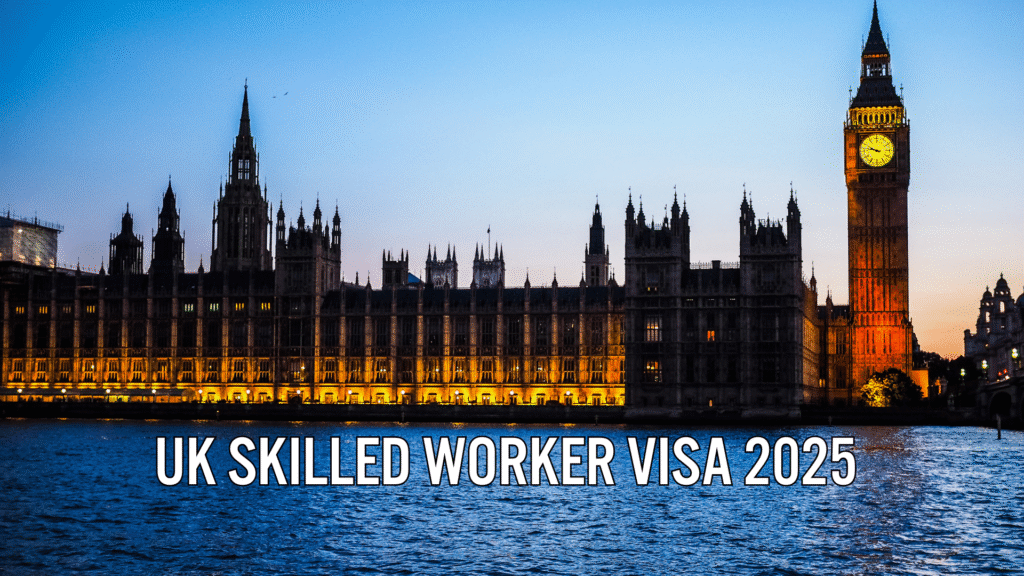
UK Skilled Worker Visa


In a significant move to reshape the UK’s immigration system, the government has announced substantial changes to the UK Skilled Worker visa changes. These reforms, set to take effect on July 22, 2025, will impact individuals looking to migrate to the UK for work. The revised rules aim to ensure that the UK attracts highly skilled professionals, particularly in areas crucial to the economy, while reducing the reliance on lower-skilled labor. The changes also come as part of the government's ongoing efforts to create a more balanced and controlled immigration system.


UK Skilled Worker Visa


Skill Threshold Upgrade for the 2025 UK Skilled Worker Route


One of the most important changes under the UK Skilled Worker visa changes is the reintroduction of a minimum skill requirement. Beginning in July 2025, all eligible roles under the Skilled Worker visa must meet at least an RQF (Regulated Qualifications Framework) Level 6 standard. Previously, workers in positions at lower skill levels, such as those classified at RQF Levels 3-5, could qualify for a Skilled Worker visa. However, concerns regarding the growing number of lower-skilled workers and the potential exploitation of such roles have led to the government tightening these requirements.


Approximately 180 occupations that previously qualified for the UK Skilled Worker visa will no longer meet the minimum standard, unless they fall under special exemptions. The goal is to prioritize higher-skilled professions and reduce the number of workers filling lower-skilled, less specialized roles. This change is a direct response to calls for a more targeted immigration system, one that better aligns with the UK’s long-term economic needs.


Special Rules for Workers Already Holding a UK Skilled Worker Visa


To accommodate those affected by the policy shift, transitional support will apply to existing Skilled Worker visa holders and pre-change sponsorships. These measures will allow current visa holders to continue renewing their visas, switching employers, or taking on additional work in roles that fall below the newly established RQF Level 6 threshold. t’s worth noting these allowances are subject to future policy adjustments.


This means that individuals who have already been granted a UK Skilled Worker visa will have some flexibility in terms of job changes and visa renewals, even if their role no longer qualifies under the new skill requirements. However, once these transitional provisions expire, all future visa applications and renewals will be subject to the updated eligibility criteria.


Updated Occupation Lists and the Role of Salary Bands


Along with the increased skill requirement, the Skilled Worker visa changes will also impact the occupation lists used by the UK government. These lists will be updated and reorganized to reflect the new focus on higher-skilled roles. The UK government plans to categorize occupations into two distinct groups:


  1. Going forward, only occupations aligned with RQF Level 6 and above will meet the criteria for UK Skilled Worker sponsorship.


  2. Jobs falling under RQF Levels 3 to 5 will generally be excluded from eligibility, unless specifically listed under approved exemptions


In addition to these changes, the Immigration Salary List, which previously outlined discounted salary thresholds for various occupations, will eventually be phased out. It will be replaced by the Temporary Shortage Occupation List, which will provide more focused and targeted support for sectors where skill shortages are particularly acute.


The Temporary Shortage Occupation List will initially cover occupations at RQF Levels 3-5, which are considered critical to the UK’s industrial and economic strategies. Over time, this list will evolve, responding to shifts in the labor market. The revised lists will not only be a useful tool for employers but also provide clarity for workers looking to apply for a visa under the Skilled Worker route.


Impact on Dependents: New Restrictions for Lower-Skilled Roles


Another significant change within the UK Skilled Worker visa changes relates to the ability to bring dependents. Under the new regulations, individuals applying for a UK Skilled Worker visa in roles that fall below RQF Level 6 will no longer be eligible to bring family members with them. This is a considerable shift from the previous system, where dependents could join workers on lower-skilled visas without restrictions.


While this change limits family reunification for lower-skilled workers, it does not affect current visa holders. Individuals already holding a UK Skilled Worker visa or those sponsored before the new rules come into effect will still be able to bring their dependents to the UK. Additionally, there are exceptions for UK-born children and cases where the primary visa holder has sole parental responsibility for their dependents.


These changes reflect the government’s broader strategy to ensure that the UK Skilled Worker visa route remains focused on attracting skilled professionals, rather than workers filling lower-skilled roles. By restricting dependent eligibility for lower-skilled jobs, the government aims to reduce the overall number of immigrants entering the UK for positions that are less likely to contribute to long-term economic growth.


Sector-Specific Exemptions: The Care Sector and Associated Roles


The recent revisions to the UK Skilled Worker visa have introduced some sector-specific exceptions, especially within the care industry. While the UK government is tightening the immigration process for many lower-skilled roles, it recognizes the pressing need for care workers. Although the ability to apply for entry clearance in the care sector is no longer available for new applicants, those already in the UK or seeking to change their visa type can still apply for a UK Skilled Worker visa until July 22, 2028.


The care sector is essential to the UK, particularly as the population ages, creating increased demand for health and social care services. The government has acknowledged these challenges and is allowing the continued importation of care workers to meet the growing demand, ensuring that the UK does not rely exclusively on local talent to fill these critical positions.


The Conclusion of the ARAP Route: What’s Next?


Another major change in the UK Skilled Worker visa system involves the closure of the Afghan Relocations and Assistance Policy (ARAP) route. This policy, established in 2021, was designed to assist Afghan nationals who provided support to the UK government and military. Since the program began, thousands of individuals and their families have been relocated to the UK under this initiative.


Starting from July 1, 2025, no new applications will be accepted for the ARAP route. However, applicants who submitted their applications before the deadline will still be eligible for family reunification and other benefits under the program. The termination of the ARAP route marks the end of a temporary measure put in place to assist Afghan nationals during a period of significant political upheaval in their home country.


What These Changes Mean for Future Skilled Worker Visa Applicants


With the UK Skilled Worker visa changes now on the horizon, prospective applicants will need to be aware of the new requirements. The reforms focus on attracting highly-skilled professionals who can contribute to sectors vital for economic growth. However, the changes will likely make it more challenging for individuals pursuing lower-skilled roles, particularly those whose occupations do not meet the newly-established RQF Level 6 standards.


As the immigration system continues to evolve, applicants will need to stay updated on these changes and understand how they may affect their eligibility. Employers, too, must ensure they are sponsoring individuals whose roles meet the revised skill and salary benchmarks outlined in the new rules.


For complete insights on immigration rules and visa changes, click here


Allocation of Study Permits


A lot of people are interested in learning about the allocation of study permits in Canada for 2024, especially those who are considering studying abroad. Recently, the Immigration, Refugees and Citizenship Canada (IRCC) unveiled the process by which it assigns study permits to each province and territory. This article explores the intricacies of this allocation mechanism and clarifies how it impacts various areas of the country.


Explaining the Allocation of Study Permits Methodology


The allocation of study permits across the country is made equally equitable by the IRCC, which bases its decision on the population of each province and territory. To reduce inequalities and ensure that international students have equitable access to education, the department does, nevertheless, make changes. The distribution method is carefully designed to balance the number of students entering various regions while taking into account the particular demands and conditions of each province. The International Relations and Cultural Centre (IRCC) seeks to create an environment that is welcoming and inclusive for foreign students who are studying in Canada. To this end, it combines population-based criteria with strategic modifications. The government's dedication to advancing diversity and quality in Canadian education while meeting the changing needs of international students is reflected in this strategy.


Distribution Adjustments


To ensure fair allocation of study permits among provinces, the IRCC implemented adjustments and caps. Provinces that were anticipated to see an increase in applications from overseas students were only allotted a maximum of 10% of their total population. The purpose of this strategy was to keep some areas from having an undue influence over the pool of research permits. In addition, provinces with approval rates lower than 60% were given extra funding, referred to as "top-ups," to make up the difference and guarantee they reached their target number of authorised study permits. By strategically adjusting the distribution of study permits, these adjustments aim to equalise opportunities while taking into account the differing demands and approval rates among provinces.


Ontario: Leading the Allocation


Ontario, being the most populous province in Canada, received the largest allocation of study permits for 2024. With 235,000 study permits allocated, Ontario continues to attract a significant number of international students. However, it's noteworthy that a substantial portion of these permits—96%—is earmarked for public universities and colleges, limiting opportunities for international students in private institutions.


Provinces and Territories Overview


Let's take a closer look at the allocations for other provinces and territories across Canada:


Province/TerritoryAllocation (A)Projected Approvals (B)Change from Prior Year (%)Top-Up (C)Revised Allocation with Top-Up (A+C)Projected Approvals (unchanged as B)
Alberta40,89424,537+10N/A40,89424,537
British Columbia83,00049,800-18N/A83,00049,800
Manitoba15,2339,140-103,42018,6529,140
New Brunswick9,2795,567-105,37214,6515,567
Newfoundland and Labrador2,3651,419+107883,1531,419
Northwest Territories333200+4900N/A333200
Nova Scotia12,9067,744-107,47220,3787,744
Nunavut333200+6567N/A333200
Ontario235,000141,000-41N/A235,000141,000
Prince Edward Island2,0041,202-103082,3121,202
Quebec72,71643,629+1045,202117,91743,629
Saskatchewan12,0437,226+103,01115,0547,226
Yukon417250+205N/A417250
Total486,523291,914-2865,572552,095291,914


IRCC's Cap on Permits Processed


It's crucial to differentiate between the cap on study permits issued and the cap on study permits processed. While IRCC does not have the authority to cap the number of approved study permits, it can regulate the number of applications processed. The department aims to maintain a national approval rate of 60%, determining the estimated cap of study permits issued based on the number of applications it intends to process. For 2024, IRCC plans to process approximately 606,000 applications.


Conclusion


The allocation of study permits in Canada reflects IRCC's commitment to fostering diversity and ensuring access to quality education for international students. By considering factors such as population size and approval rates, IRCC strives to distribute study opportunities fairly across provinces and territories. As prospective students explore their options to study in Canada, understanding the allocation process provides valuable insights into the educational landscape of the country.


For more information on study permits and immigration procedures, visit the official website of Immigration Refugees and Citizenship Canada.


By staying informed about these allocations and procedures, prospective international students can make well-informed decisions about their educational journey in Canada.


For visa and immigration services, click here to explore opportunities with Gatewayz Tourism LLC.


Dhow Cruise Dinner


Setting off on a journey to see Dubai's wonders? Try the Dhow Cruise Dinner for an enticing blend of cuisine, culture, and relaxation. Let's look at the charm of this encounter and how it promises a life-changing adventure. This cruise stands out among the various alternatives offered, inviting you to fully enjoy the Arabian Peninsula's wonderful hospitality. A lavish and luxury experience awaits you as you sail through the calm waters of Dubai Creek or Dubai Marina in a beautifully constructed dhow. Reserve your position today with Gatewayz tourist LLC, Dubai's leading provider of travel and tourism services, to ensure your spot and begin a journey to remember.


Sailing into Serenity


Dhow Cruise Dinner Delight


An famous Dubai experience, the Dhow Cruise Dinner artfully combines the luxury of fine dining with the allure of classic Arabian sailing vessels. Sail on a well built dhow through the calm waters of Dubai Creek or Dubai Marina while the captivating city skyline is lit up by the stars. This experience has been carefully designed by Gatewayz Tourism LLC, and it is luxurious and serene in every way. Take in the stunning vistas and engage in a gourmet tour while soaking up the atmosphere and delicious meals. Every aspect of the Dhow Cruise Dinner, from the elegant décor to the delicious meals, is expertly designed by Gatewayz Tourism LLC to guarantee an amazing journey full of luxury and leisure.


Beautiful Lighting and Fine Dining


You will be captivated with the carefully created environment by Gatewayz Tourism LLC as soon as you climb aboard the tastefully decorated dhow for your Dhow Cruise Dinner experience. Rich, calm ambience is created by the well-furnished furnishings, which are infused with elaborate Arabic patterns and soft lighting. Your senses are awakened as soon as you take a seat and inhale the delicious aroma of the food. To satisfy picky palates, every culinary element at Gatewayz Tourism LLC is carefully chosen. The magnificent buffet spread provides a wide variety of cuisines, ranging from mouthwatering foreign fare to genuine Arabian treats. Savor flavorful rice dishes, rich sweets, and juicy kebabs, all expertly prepared with the best ingredients to create a culinary experience that perfectly balances the magical atmosphere of your Dhow Cruise Dinner.


Immersive Entertainment and Cultural Delights


Enjoy a mouthwatering display of traditional Arabian entertainment while you savor the culinary delights provided by Gatewayz Tourism LLC. Your Dhow Cruise Dinner experience is made even more magical by the onboard entertainment, which includes soul-stirring live music performances and captivating Tanoura dancers spinning in vibrant costumes. In addition, Gatewayz Tourism LLC takes pride in providing information about Dubai's rich cultural past. Experienced tour guides tell intriguing tales of the city's transformation from a small fishing hamlet to an international metropolis as you travel around the historic waterways. It's an adventure through time and culture, not just a typical dinner cruise.


Adding Value with Visit Visa Services


In order to improve your travel experience, Gatewayz Tourism LLC goes above and beyond the appeal of Dhow Cruise Dinner. Their extensive range of services includes help with visit visas, regardless of how long you want to remain in Dubai. Although navigating the visa application procedure might be difficult, you can be confident that your trip to Dubai will be easy and stress-free because of Gatewayz Tourism LLC's experience. They offer individualized help, assisting you with the criteria of your visa application and guaranteeing fast approval thanks to their staff of experienced professionals. Gatewayz Tourism LLC streamlines the visa application procedure so you can concentrate on making lifelong experiences in Dubai, whether you're visiting for business, pleasure, or to reconnect with loved ones.


Conclusion


The elegant fusion of history, luxury, and hospitality that is the Dhow Cruise Dinner reflects the true spirit of Dubai's attraction. This iconic experience is brought to new heights with Gatewayz Tourism LLC, guaranteeing an incredible journey beneath the stars. Every detail has been carefully designed to satiate the senses, from the delicious food and engrossing entertainment to the enchanted atmosphere. Additionally, Gatewayz Tourism LLC and Explore My World makes sure that your trip to Dubai is not only hassle-free but unforgettable with their extensive selection of travel and tourism services, which include aid with visit visas. Enter the charm of Dhow Cruise Dinner and experience a beautiful voyage with Explore My World and Gatewayz Tourism LLC, where every moment is a celebration of Arabian elegance and hospitality. Reserve your spot today to guarantee it and join Gatewayz Tourism LLC on a once-in-a-lifetime journey!


$( ".forminator-button" ).click(function() { alert( "Handler for .click() called." ); });